Platform

BIO·NEXUS

A knowledge operations platform for biodiversity and life science programs, covering the full range from mobile field data capture and synchronization through governed data management, analytical workflows, and decision-ready reporting. Currently in active regulatory use across government agencies.

Primary Platform

A knowledge operations platform for biodiversity and life science programs

BIO·NEXUS is the operational surface underneath curation, identification, and release control. Instead of scattering work across separate utilities, teams move through record management, analytical services, and publication decisions in one governed system, with every action logged, traceable, and release-ready.

Biodiversity Data Management

Specimen data, analytical results, and compliance status, linked and release-ready in one workspace

BIO·NEXUS provides a single portal for any dataset, regardless of scale, supporting analysis, visualization, comparison, and compliance checks in one place. The platform handles collections in excess of 100,000 records without compromising performance, and keeps summaries, curation workflows, and publication packaging organized throughout the data lifecycle.

Recordset summaries Specimen continuity Release packaging
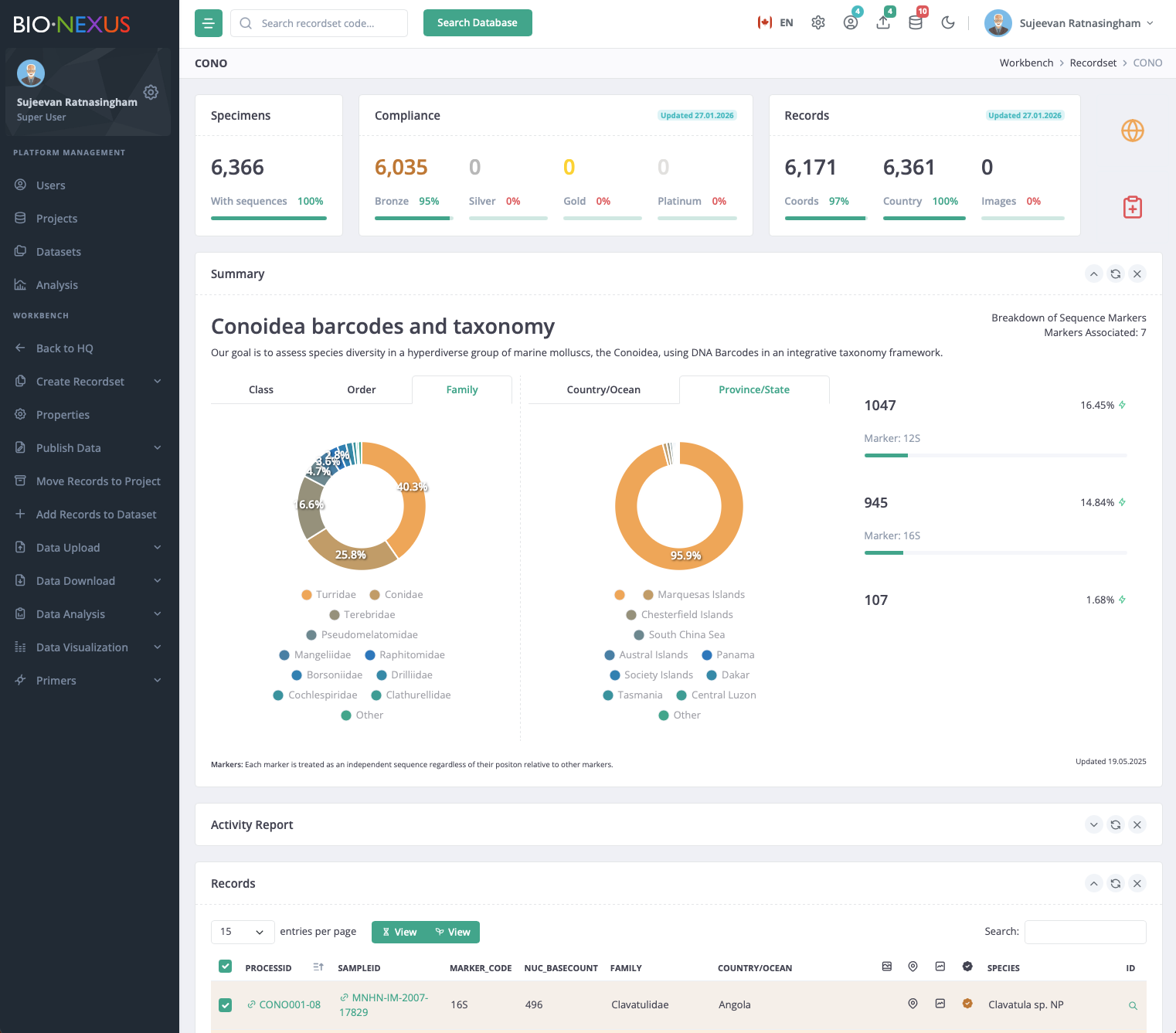
BIO·NEXUS recordset workspace showing specimen counts, compliance status, taxonomic summary, and records in one view
BIO·NEXUS recordset view showing specimen counts, compliance state, taxonomic summary, and working records in one release-oriented workspace.
Geospatial Analysis

Full geospatial analysis at any resolution, from individual records to global-scale mapping

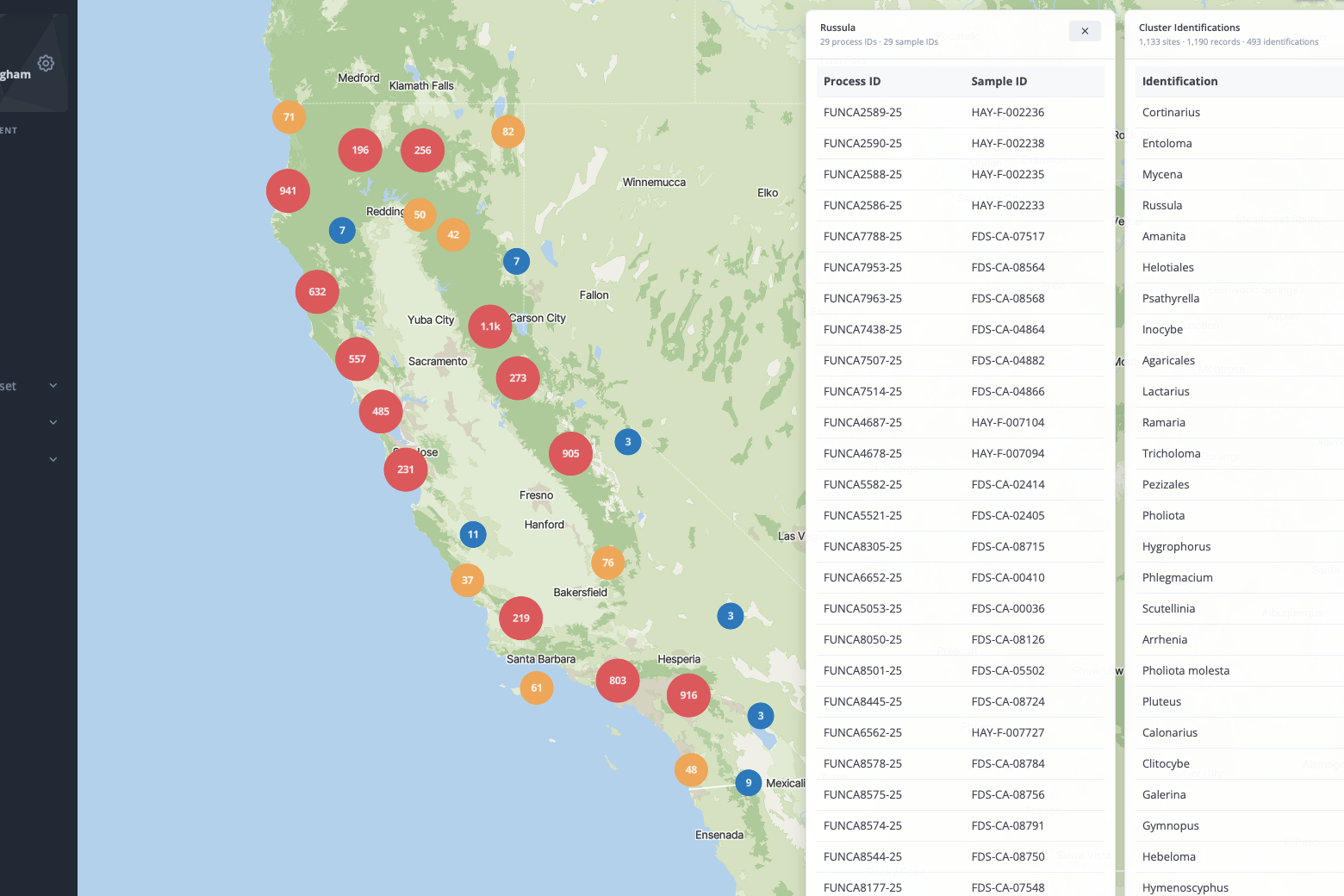
Data in BIO·NEXUS is accessible through a map interface at any resolution. Markers cluster automatically as you zoom out and drill down to individual records at finer scales, where you can inspect the data for any specific site or collection event. The Arthropod Biodiversity Monitoring Dashboard is one example of what these geospatial capabilities enable at full scale, rendering 13 million records across 2,676 global sites with drill-down to community composition, phenology, and site comparisons.

Multi-resolution maps Clustering Record drill-down Spatial filters
BIO·NEXUS integrated geospatial visualization showing data at multiple resolutions with clustering and per-record drill-down
Integrated geospatial visualization tool showing data accessible at multiple resolutions with clustering and per-record drill-down for any site or collection event.
Analysis Framework

From idea to working pipeline in a single day, with LLM-guided development and built-in validation

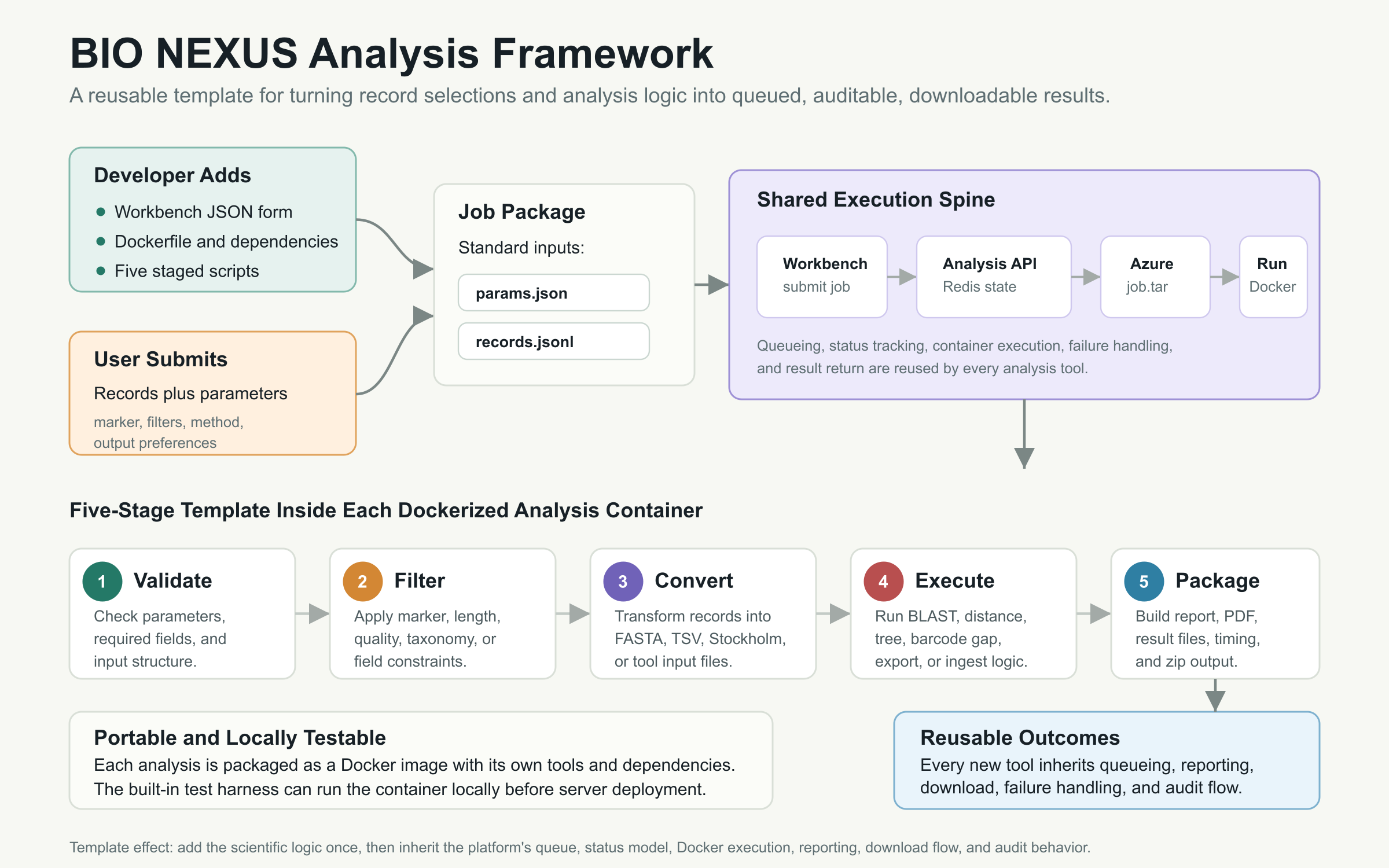
BIO·NEXUS structures any analytical task into a defined sequence of segments covering data selection, filtering, transformation, analysis, and output. Pipeline development is LLM-guided. You describe what you want to analyze and the system helps configure each segment interactively, working within the standard segment framework as a set of guardrails. The result is a pipeline that is well-formed and consistent by construction rather than by review. A built-in validation harness tests each pipeline before execution, providing the safety layer that makes rapid analytical tool development practical without sacrificing reliability.

LLM-guided development Modular segments Validation harness Rapid prototyping
BIO·NEXUS analysis pipeline framework showing modular segments from data selection through to AI-generated output
The BIO·NEXUS analysis framework structures pipeline development into configurable segments, with LLM-guided assembly and a built-in validation harness for safe, rapid tool development.
Integrated Administration and Governance

Full control over access, approvals, and publication, with every action logged and traceable to the record

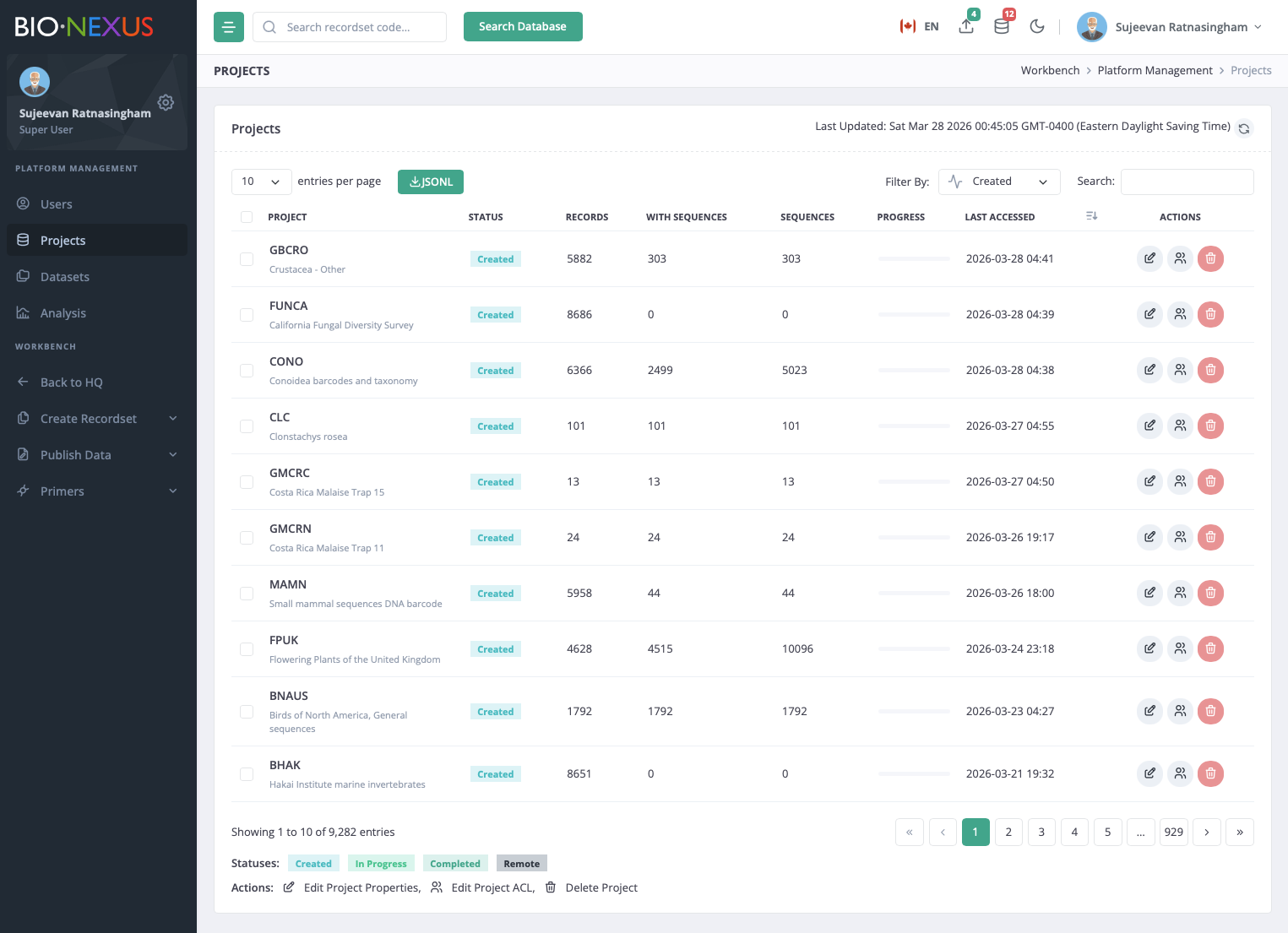
BIO·NEXUS includes a full administration layer covering organization setup, user and role management, and per-project access boundaries. Project managers can track status and milestones across the full portfolio. Curators and reviewers operate within defined access scopes. Release gates can be configured for single or multi-party sign-off before records move to publication. All decisions, approvals, and modifications generate an audit trail attached to the underlying records, making the platform well-suited for regulatory and compliance-sensitive programs.

Organization management Role-based access Audit trails Release gates Project lifecycle
BIO·NEXUS project management view showing project status, record volumes, sequencing progress, and actions
BIO·NEXUS project view showing status, record volumes, sequencing progress, and the managed actions that support reviewed release workflows.
Mobile Data Collection

LifeScanner

LifeScanner brings the full DNA barcoding pipeline to the field. Users collect biological samples using a standardized collection kit, submit them through a companion mobile app, and receive species identification results routed through the BOLD reference library. Originally developed in 2014, it is one of the most mature mobile biodiversity collection platforms available and has demonstrated, at deployable scale, that professional-grade biodiversity data collection does not require a laboratory setting.

LifeScanner has been deployed broadly by NGOs and has supported citizen science programs run by the David Suzuki Foundation, Sea Choice, Oceana, and Let's Talk Science, among others. It has also been used in law enforcement applications in South Africa, demonstrating its reach across regulatory, conservation, and public engagement contexts.

For institutional programs that need field-level collection integrated with a governed data pipeline, LifeScanner provides the mobile-facing layer that connects sample collection to the same infrastructure that underlies BIO·NEXUS.

Collection Kit Mobile App BOLD Pipeline Citizen Science Field Deployment
Discuss Mobile Collection Needs
Institutional Use

For programs deploying at scale, including government monitoring initiatives, conservation surveys, and citizen science programs, LifeScanner can be integrated with BIO·NEXUS so field-collected records flow directly into governed data management workflows.

What You Leave With

BIO·NEXUS configured and in active use by your program. Field capture, recordset management, geospatial analysis, analytical pipelines, role-based access, audit trails, and release workflows all running against your data. Curators and reviewers trained on the platform, operational documentation transferred to your team, and a support arrangement for the questions that come up after the platform is in production.

Platform Fit

Who is this platform for?

Built for institutions and programs that require infrastructure-grade data management, governed workflows, and compliance-ready outputs for biodiversity and life science work.

01

Forensic & Regulatory Programs

Chain-of-custody documentation, audit-ready record trails, and outputs structured for legal and regulatory review.

02

Reference Library Programs

Configured for institutions contributing to or curating BOLD-aligned reference libraries, with versioned record management, provenance tracking, and publication workflows.

03

Conservation & Monitoring Programs

Geospatial dashboards, timeseries analysis, and structured outputs for programs tracking species presence, abundance, or change over time.

Engagements begin with a scoping conversation to understand your data workflows, governance requirements, and program objectives.

Request a Platform Walkthrough